

 English
 русский
 Español
 عربى
عربى


A standard butane lighter flame burns at about 800–1,000°C (1,472–1,832°F) in its outer envelope, while the inner cone that you usually aim at a cigarette or candle is cooler, roughly 300–500°C (572–932°F). A butane jet or torch flame climbs to about 1,430°C (2,610°F), and some multi-jet models push beyond 2,000°C. The honest answer to “how hot is a lighter flame” is that it depends on the fuel, the nozzle design, and which part of the flame you measure.
What Temperature Is a Lighter Flame?
For a standard butane soft-flame lighter, the practical answer is 800–1,000°C at the outer envelope. Everything else is detail: flame temperature varies from the edge to the core, and it shifts with fuel blend, nozzle geometry, ambient temperature, and air movement.
| Lighter type | Fuel | Typical flame temperature | Flame appearance |
|---|---|---|---|
| Soft-flame lighter | Butane | 800–1,000°C outer zone; 300–500°C inner cone | Yellow-orange with a blue base |
| Jet or torch lighter | Butane | 1,300–1,430°C; multi-jet models above 2,000°C | Narrow, blue, distinct hiss |
| Naphtha lighter | Naphtha fluid | 500–800°C | Soft yellow, wider flame |
Jet flames run hot because a torch nozzle premixes butane with air before ignition. The fuel burns quickly in a compact zone, releasing its energy in a small area. A soft-flame lighter relies on diffusion: outside air mixes with the fuel only after it leaves the nozzle, so combustion is slower and the flame spreads across a larger, cooler area. Theoretical adiabatic values run higher than real-world measurements because open flames lose heat to the surrounding air, which is why the ranges above are more useful than a single number.
Two Flame Zones, Two Different Temperatures
The outer envelope of a flame is always the hottest part, and the inner cone is the coolest. That layering explains why the peak temperature of any lighter flame sits at the edge, not where you usually hold the object you are lighting.
| Flame zone | Temperature range | What happens |
|---|---|---|
| Outer envelope | 800–1,000°C | Complete combustion; the hottest region |
| Luminous middle zone | 600–800°C | Soot particles glow and emit visible yellow light |
| Inner cone (the “hollow” center) | 300–500°C | Fuel-rich mix with little oxygen; noticeably cooler |
This is why a lighter flame looks hollow. The glowing soot sits in the middle zone, while the center is a pocket of unburned fuel. The blue base of a butane flame is the fresh fuel-air mixture just above the nozzle, and blue usually signals a high temperature and clean combustion. A pure blue torch flame is the hottest configuration available in a pocket-size lighter.
Blue-flame jet lighters are built specifically to keep combustion in this high-temperature regime, which is why they are a common choice for cigars, heat-shrink tubing, and precision work.
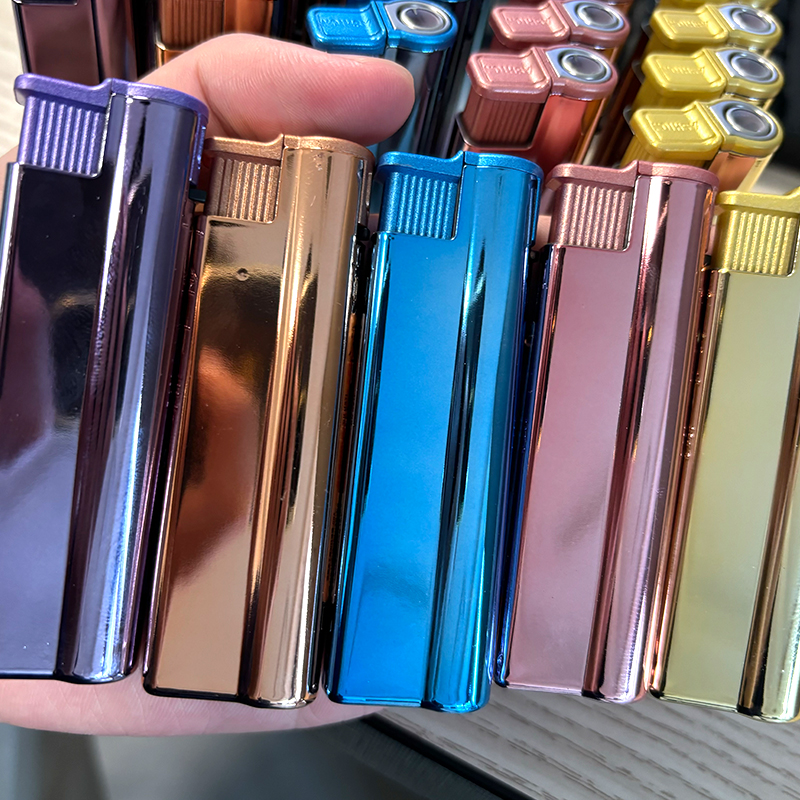 JH8058 Solid Color Blue Flame Straight Punch LighterThis compact blue-flame lighter features a durable solid-color shell and windproof design. It is positioned for high-temperature precision tasks like cigars or heat-shrink tubing, offering quick ignition and safety mechanisms for reliable outdoor use.View Product →
The Fuel, Not the Size, Sets the Temperature Ceiling
The fuel dictates the maximum possible flame temperature, and the lighter design decides how close it gets to that ceiling. Butane is the fuel behind almost every high-temperature lighter because it vaporizes easily, mixes cleanly with air, and produces a short, intense flame.
- Butane: clean-burning with a high heat release; used in soft-flame, jet, and most windproof lighters.
- Naphtha: heavier and less volatile; it produces a wider yellow flame with visible soot and a lower peak temperature.
- Air-to-fuel mix: premixed jet nozzles produce a short blue flame at the top end of the fuel’s temperature range; diffusion flames stay cooler and larger.
Butane has a low ignition threshold—about 25°C (77°F) in laboratory conditions—which is why a spark lights it instantly. That number describes when the gas starts to burn, not how hot the resulting flame becomes. This is also why the temperature of a lighter flame is usually discussed in terms of butane: it powers the disposable lighters most people carry and virtually every fuel type used in windproof lighters. One nuance: adjusting the flame height changes heat output, not peak temperature. A taller flame burns more fuel per second and transfers more heat, but the hottest part of the combustion zone stays at roughly the same temperature.
How Hot Does the Flame Need to Be in Real Use?
For daily tasks, 800°C is far more than enough. The practical question is how much heat reaches the object and whether the flame stays stable while it does. Here is what the temperatures mean in actual scenarios:
- Cigarettes and candles: the 300–500°C inner cone lights them easily; the hotter outer envelope can scorch tobacco if you hold the flame too close.
- Lighting cigars: a narrow jet flame at around 1,300°C lights the foot evenly and does not deposit sooty smoke the way a soft yellow flame can.
- Outdoor camping and hiking: wind strips heat from an open flame, so a compact jet flame or a windproof design holds its effective temperature much longer.
- Fire-starting and survival: sustained heat delivery beats peak degrees; a wide soft flame can ignite kindling more reliably than a pinpoint torch.
In strong wind, the effective temperature of any flame drops sharply because moving air carries heat away faster than the combustion zone can replace it. That is the scenario in which windproof lighters maintain efficient ignition in strong winds by shielding the flame and premixing fuel with air. For outdoor users, an electronic windproof lighter keeps a stable high-temperature flame in a compact, impact-resistant body.
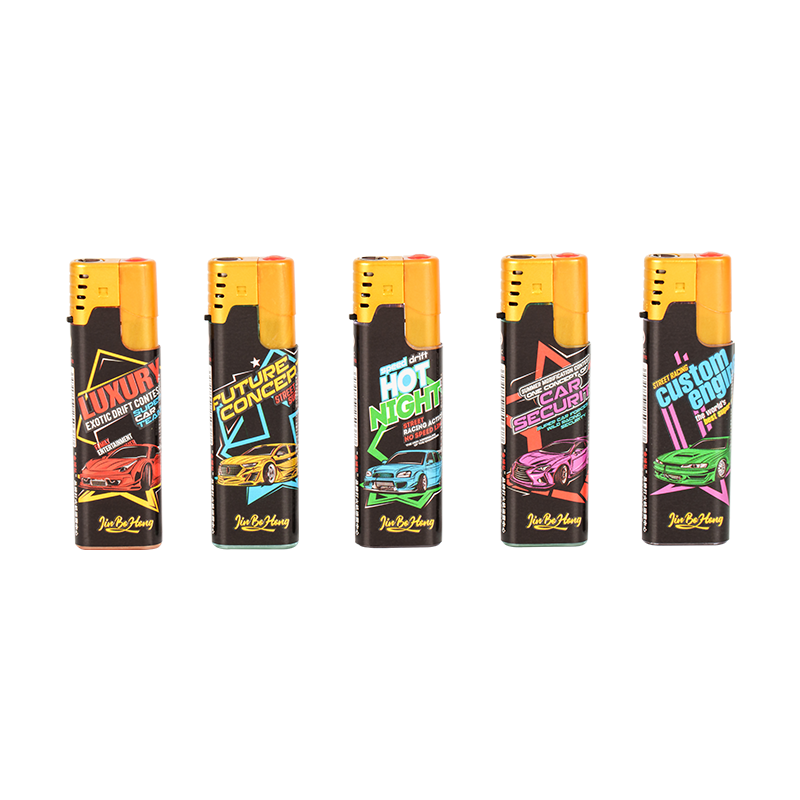 JH9017 Powerful Electronic Windproof LighterA lightweight electronic windproof lighter weighing 15.3 grams, designed to keep a stable high-temperature flame in strong winds. Ideal for outdoor ignition, it meets the need for reliable performance where conventional lighters fail.View Product →
How Hot Does the Lighter Body Get?
Much cooler than the flame, but still hot enough to burn skin. A peer-reviewed burn study on disposable butane lighters found that the top of a lighter held upright needed more than 50 seconds to reach 60°C, while the same lighter held on its side reached 60°C in about 15 seconds. Human skin begins to injure at roughly 69–70°C when exposed for a few seconds, so the plastic body can become unsafe long before it looks dangerous.
- Never test a flame or a heated lighter body with your hand.
- After a long burn, the nozzle and strike wheel store heat and can cause contact burns.
- Wait for the body to cool before putting the lighter in a pocket or bag.
- Keep the flame away from hair, clothing, and flammable liquids; the outer envelope is hard to see in bright light.
For everyday use, a durable open-flame lighter that protects the nozzle and ignition components reduces both heat transfer to the body and the chance of accidental contact.
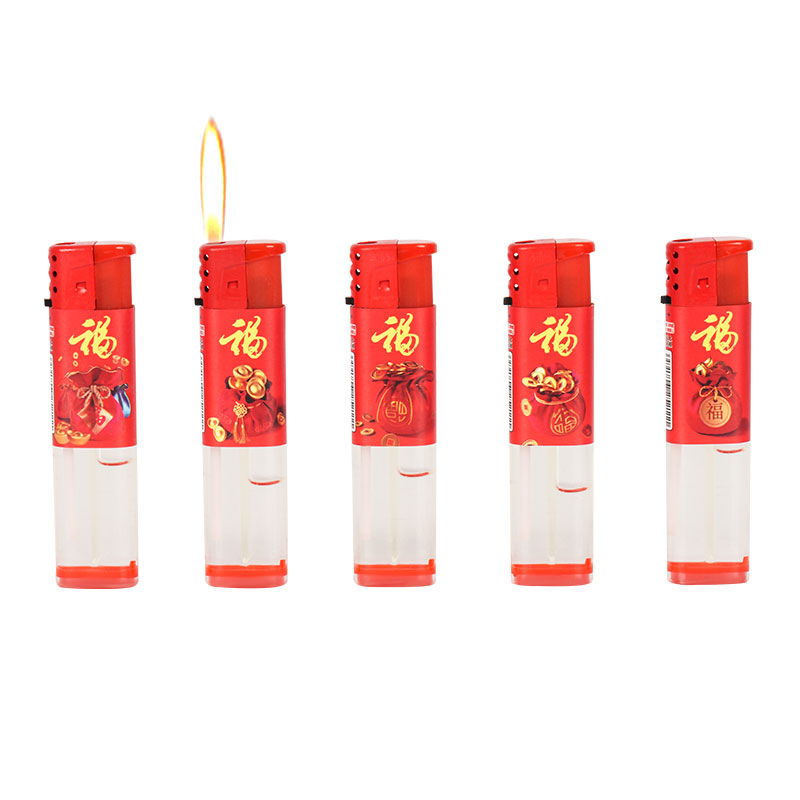 Durable Open Flame Lighter JH211A small and portable open-flame lighter with a protective nozzle and ignition components. Weighing just 11.9 grams, it is suited for everyday carry and customizable color options, reducing heat transfer and accidental contact during use.View Product →
Frequently Asked Questions
Why does a lighter flame look hollow?
Because the inner cone is filled with unburned, fuel-rich gas that has not yet mixed with enough oxygen. The flame appears hollow because this core produces almost no visible light, while the surrounding zones glow yellow and blue.
Is a blue flame always hotter than a yellow flame?
Within the same fuel system, blue indicates more complete combustion and a higher temperature. Yellow and orange come from glowing soot particles, which radiate light at a lower temperature. A fully premixed butane torch flame is blue, and it is hotter than the yellow diffusion flame of a soft-flame lighter.
What temperature does a jet lighter flame reach?
Consumer butane jet lighters typically reach about 1,300–1,430°C. Multi-jet models can exceed 2,000°C, which is hot enough to melt metals such as lead (327°C) and solder, and to soften small areas of glass.
Can you make a lighter flame hotter?
Only by changing the design, not by adjusting the flame height. A torch or jet lighter that premixes air with butane produces the hottest flame. Increasing the flame height burns more fuel per second and raises heat output, but the maximum temperature of the combustion zone remains similar.
Bottom line: a standard butane lighter flame burns around 800–1,000°C at its hottest outer edge, a butane torch flame reaches roughly 1,430°C, and a naphtha flame stays in the 500–800°C range. For everyday needs, the more useful number is not the peak temperature but how consistently the flame delivers heat in the conditions where you actually use it.