

 English
 русский
 Español
 عربى
عربى


The short answer: a flexible grill lighter is worth owning if you cook on a gas grill, a charcoal kettle or a fire pit, because its bendable neck lets the nozzle reach the burner while your hand stays roughly 20 to 30 cm from the heat. The models that disappoint people are almost always short-necked, soft-flame units that flop in a breeze, not the category itself.
What follows covers what "flexible" actually describes, how the common ignition systems behave around a hot grate, which specifications separate a durable tool from a disposable one, and what to verify if you are ordering flexible lighters by the container instead of buying one at a time.
What a Flexible Grill Lighter Actually Is
A flexible grill lighter is a long-reach igniter built on a bendable metal gooseneck, so the tip can be angled into a grill, lantern or fire pit while the handle stays outside the hot zone.
Two parts define the product, and they are technically independent of each other.
- The neck. Gooseneck models typically run 20 to 30 cm long and are designed to hold whatever angle you bend them to, so the tip stays where you aimed it.
- The ignition. The same flexible body can carry an electric arc electrode, a butane jet nozzle, a piezo-driven open flame, or a traditional grinding wheel.
So "flexible" describes the neck only. It says nothing about flame shape, wind resistance or fuel type, which is why two lighters that look identical on a shelf can behave completely differently over a bed of charcoal.
Reach and Angle Matter More Than Flame Type
Neck length decides how close your knuckles get to the grate, so measure the distance from the tip to your grip before you compare anything else.
On a 55 to 60 cm kettle grill, the rear charcoal pile usually sits 40 to 50 cm from the front rim. A 20 cm gooseneck held near its base places your hand about 30 to 35 cm from the flame; a 30 cm neck buys another 10 cm of clearance, which is often the difference between a comfortable click and a flinch. Chimney starters follow the same logic: you want to reach the bottom vent without your forearm hovering over lit coals.
Stiffness matters as much as length. A gooseneck that sags under its own weight once it warms up will drift toward the grate while you hold it, and a joint that kinks after a few dozen bends stops holding an angle at all. A crimped or welded metal tube with a defined wall thickness holds up; a thin, springy sleeve does not.
Arc, Jet Torch or Open Flame: Match the Ignition to the Job
Match the ignition system to what you light most often: a jet torch for grills and fire pits, an electric arc for candles, gas burners and tinder, and a soft open flame for calm indoor work.
| Ignition system | Wind resistance | Flame character | Fuel or power | Best suited to |
|---|---|---|---|---|
| Electric arc (plasma) | High, because there is no flame to blow out | An arc between two electrodes that needs contact with a wick, paper or tinder | USB rechargeable, commonly quoted at 300 to 600 lights per charge | Candles, gas burners, paper, camp tinder |
| Jet torch (butane) | Very high, thanks to a concentrated blue flame | Narrow and hot, often quoted around 1,300 °C at the tip | Refillable butane, roughly 10 to 20 minutes of continuous burn per fill | Grills, fire pits, charcoal chimneys, searing |
| Electronic open flame (piezo) | Low to moderate; the soft flame is easily disturbed | Soft yellow flame with a wider, gentler heat | Butane, several hundred lights per fill | Candles, gas hobs, calm outdoor evenings |
| Grinding wheel open flame | Low | Soft flame produced by a flint wheel | Butane or lighter fluid depending on the model | Everyday budget use, indoor candles |
Two consequences follow. First, the flexible neck never compensates for the wrong flame: a soft flame on the end of a 30 cm neck is still a soft flame, and it still dies the moment a breeze crosses the grate. Second, fuel type drives maintenance. Butane models need refilling and a valve that seals properly, while arc models need a charge and a clean electrode.
If you want one tool that covers a barbecue, a fire pit and a camping stove, a jet torch on a long flexible neck is the practical default, because the flame is hot enough to light damp charcoal and stable enough to survive a gust. Outside the barbecue, electronic open flame lighters have picked up a long list of everyday uses, from citronella candles to workshop tinder, which is worth knowing if the same lighter has to live in a kitchen drawer all year.
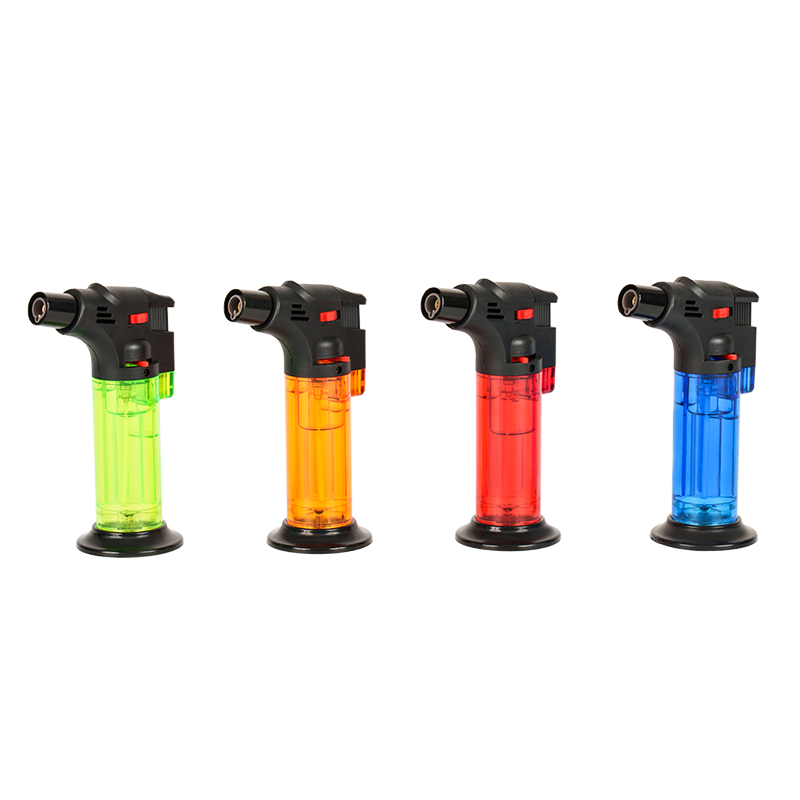 JH101 Gun Jet Flame Lighter for Kitchen and CigarsA practical ignition choice for versatile-tool discussions, with JH101 jet flame, large gas capacity, high flame temperature, kitchen and cigar use.View Product →
Specifications Worth Checking Before You Buy
Nine specifications decide whether a flexible grill lighter lasts five years or five weeks, and the first four matter most.
- Neck length and joint quality. For a full-size grill, 25 cm is the practical minimum; check that the joint is crimped or welded rather than glued into a plastic collar.
- A safety switch or child-resistant mechanism. Many markets require child resistance, and a recessed switch also prevents accidental ignition inside a bag or pocket.
- Momentary versus lock-on ignition. A lock-on tab is handy for a long chimney-lighting session, but it is one more thing to remember to switch off, which is why some safety standards discourage it on certain designs.
- Visibility of the flame or electrode. You need to see where the tip is pointing before you click; an open nozzle or a visible electrode window helps in bright daylight.
- Endurance. Arc lighters commonly quote 300 to 600 ignitions per charge, while butane torches deliver roughly 10 to 20 minutes of continuous burn per fill. Short bursts consume far less.
- Refill valve. A standard butane valve accepts ordinary cans without an adapter; proprietary valves turn a simple refill into a search for a specific nozzle.
- Body material. Iron-shell or metal-bodied units survive drops onto concrete that crack thin ABS housings at exactly the point where the neck meets the body.
- Altitude and temperature behaviour. Above roughly 2,000 m, butane pressure drops noticeably and the flame shrinks, so a piezo model that works at sea level may feel weak on a mountain trip.
- Water and dust protection. If the lighter lives in a camping kit, an IP rating is more useful than a decorative finish.
Lighting a Hot Grill Safely
Treat the tip like a hot soldering iron for half a minute after you release the trigger, and treat the fuel like fuel; those two habits prevent almost every accident in this category.
- Let the nozzle or electrode cool for 20 to 30 seconds before you put the lighter down, and never lay it on a warm side shelf.
- Light from upwind so the flame is carried toward the burner, not back toward your hand.
- Keep the body outside the grill opening. A long neck exists precisely so the handle never needs to hover over the grate.
- If a burner does not light within a few seconds, stop clicking, wait for the gas to clear, and try again.
- Do not overfill butane. Fill to roughly 80 percent of capacity and wait two to three minutes before igniting, so any propellant settles.
- Test the valve with soapy water, never with a flame.
- Store the lighter at room temperature. One left in a hot car can see internal pressure rise well beyond its design range.
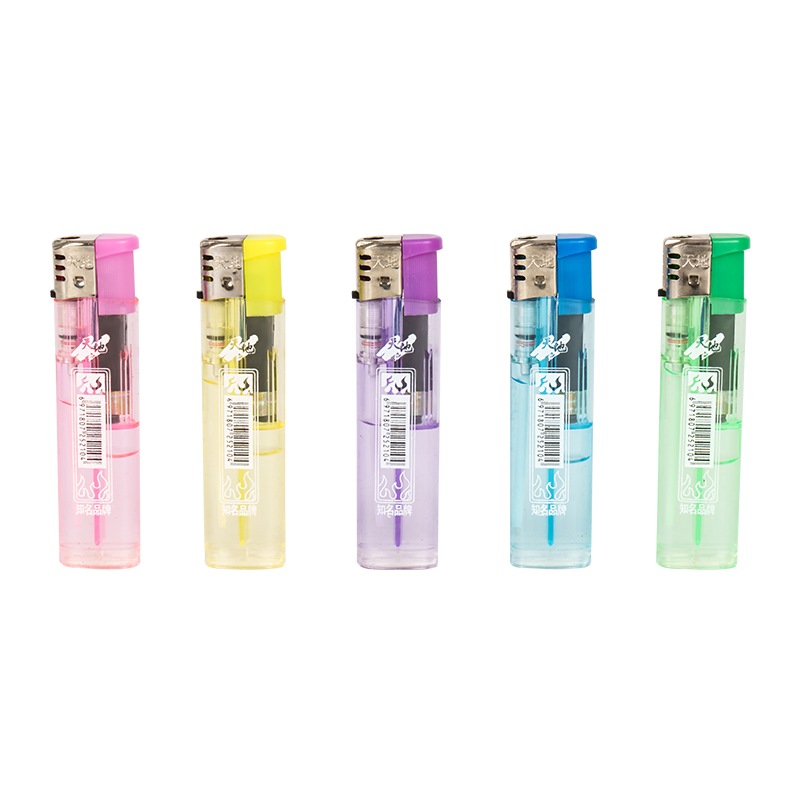 JH309 Safety Windproof Open Flame Lighter for Pocket CarrySmall 12.7 g electronic open flame lighter with windproof safety design, suited to pocket carry and custom orders.View Product →
What Volume Buyers Should Ask a Lighter Factory
Volume buyers should judge a factory on its existing ignition platforms and tooling, not on a single sample, because a flexible neck is almost always an adaptation of a lighter platform the factory already produces.
Four questions are worth asking early. Which ignition systems are already in production, meaning piezo open flame, arc, jet or grinding wheel? Who supplies the gooseneck tubing, and how is the joint formed? What safety and child-resistance certification does the destination market require, and can the factory supply the test reports? And how much of the neck length, body finish and packaging can be changed without committing to new tooling?
China Cixi Jihong Electronics Co., Ltd. is one example of a supplier built that way. The company traces its roots to a 1995 predecessor, was formally established in 2014, and describes 29 years of accumulated manufacturing experience from a base in Cixi, Zhejiang. Its output is organised around electronic open flame lighters, windproof and iron-shell windproof lighters, wheel-driven open flame models, gun-style jet igniters and blue-flame straight-punch lighters, supported by automated production lines and an internal design team that takes on OEM work for buyers who need new models rather than catalogue items. Its product range is the quickest way to see which platforms are already tooled and which neck lengths are available off the shelf.
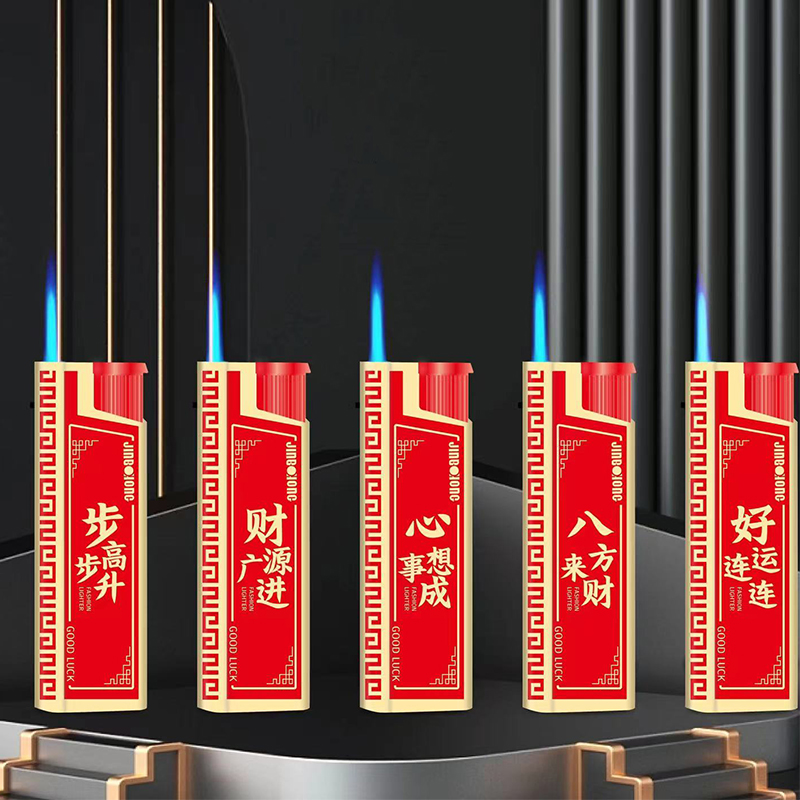 JH8057 Customizable Blue Flame Straight Punch LighterCustomizable blue-flame straight punch lighter with engraved text and metal shell, an option to assess among OEM blue-flame models.View Product →
FAQ: Flexible Grill Lighters in Practice
Are flexible lighters allowed in hand luggage?
Rules vary by country and airline. Ordinary lighters are generally permitted in carry-on baggage but not in checked baggage, while jet torch or blue-flame lighters are usually banned in both. Confirm the current rules with your airline before you travel.
Does a flexible lighter still work in wind?
A jet torch and an electric arc both handle wind well; a soft open flame does not. The jet torch is the most wind-stable flame type, while an arc has no flame to blow out but must touch the tinder directly to work.
How long does the fuel or the charge last?
A butane jet torch gives roughly 10 to 20 minutes of continuous burn per fill, and an arc lighter typically quotes 300 to 600 ignition cycles per charge. Real-world use is lighter than both figures, because most people light a grill in two or three seconds rather than holding the trigger down.
Can a flexible lighter light a charcoal chimney?
Yes, and it is one of the easiest jobs for one. Rest the chimney on the grate, insert the nozzle through a bottom vent between the coals, and hold it there for around 20 seconds while keeping the nozzle moving so it does not overheat.
Arc or flame for a gas grill?
Either works. An arc avoids storing fuel and is unaffected by wind, while a flame gives visible confirmation that the burner has caught and performs better on damp or slightly clogged burners.
A flexible grill lighter comes down to a short decision tree: choose the ignition system that matches how you cook, then insist on a neck that is long enough, stiff enough and certified for the market you live in. Buyers sourcing in volume should start from the platforms a factory already runs and work outward to the neck, the housing and the branding, because that is where cost, lead time and reliability are actually decided.