

 English
 русский
 Español
 عربى
عربى


A gun lighter is a functional flame source built into a body that resembles a pistol, revolver, or rifle. Most models use the same internals as a modern butane lighter: piezoelectric ignition, a fuel tank, and a flame nozzle, all wrapped in a gun-shaped housing. Some are realistic metal replicas; others are clearly playful novelties. Either way, the deciding factors are flame type, build quality, and safety.
What Is a Gun Lighter?
A gun lighter, also called a pistol lighter, is exactly what the name says: a lighter shaped like a gun. The design may copy a specific firearm or use a generic pistol outline, but the internal mechanism remains standard. The fuel is butane, the ignition is a spark wheel or a piezoelectric module, and the flame comes from a small nozzle near the barrel tip. Because the housing is the main difference, the quality of a gun lighter depends far more on the mechanism and shell material than on how realistic the decoration looks.
Gun lighters have always occupied a niche in the lighter market. Some buyers are smokers who enjoy the novelty; more are collectors who do not smoke at all. Realism varies a lot: bright, rounded toy-like designs at one end, and metal replicas at the other that could pass for a real firearm at a glance. That realism is the source of most safety concerns, but the functional side is no different from any other butane lighter.
Main Types of Gun Lighters
There is no single standard gun lighter. The most useful way to compare models is by flame type and ignition format. Jet-flame and soft-flame designs dominate, and electric-arc versions also exist. The choice affects wind resistance, fuel consumption, and what the lighter can realistically ignite.
| Type | Flame output | Best suited for |
|---|---|---|
| Jet flame gun lighter | Narrow, blue, wind-resistant flame with high temperature | Outdoor use, cigars, windy conditions, refillable daily use |
| Soft flame gun lighter | Wider yellow or orange flame, lower heat, affected by wind | Indoor smoking, candles, everyday ignition |
| Electric arc gun lighter | No visible flame; electric plasma arc powered by a battery | Windy situations, no-fuel ignition, tech-inspired designs |
Jet-flame gun lighters are the most practical choice for most buyers because the concentrated blue flame resists wind and reaches a high temperature quickly. The trade-off is higher fuel consumption and a harsher flame for lighting cigarettes. Soft-flame versions are gentler but struggle outdoors. Electric-arc gun lighters remove fuel from the equation entirely, but battery life and a limited supply of quality models make them less common.
A representative example of a properly built jet-flame gun-style product is the gun jet flame lighter in our gun-igniter line. It uses a durable body, a refillable butane tank, and a piezoelectric ignition system designed for repeated use rather than a disposable plastic shell.
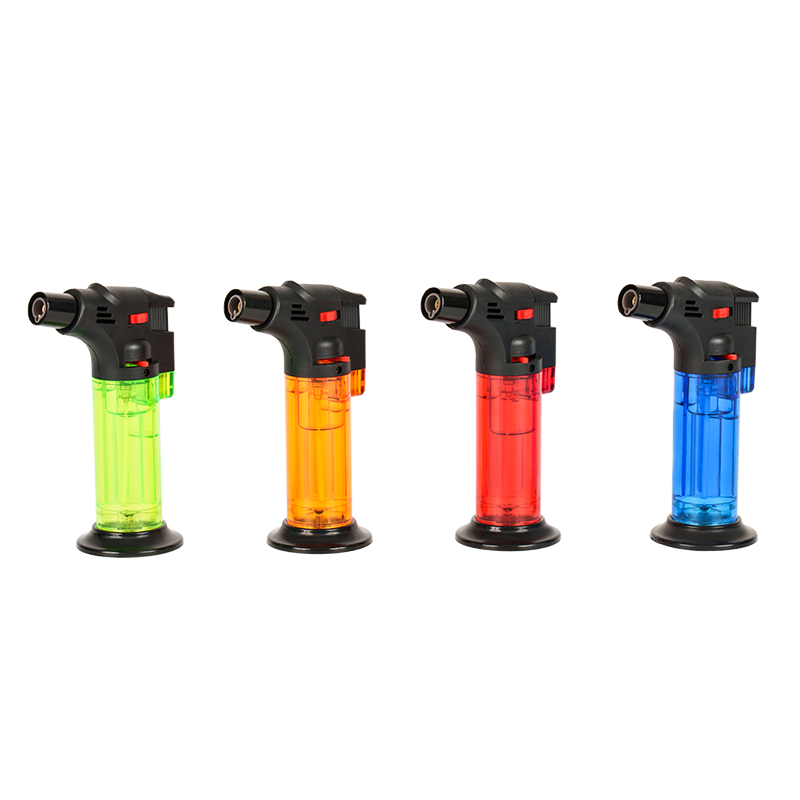 Gun Jet Flame Lighter with Refillable Butane TankThis gun-style lighter features a refillable butane tank, piezoelectric ignition, and a high-temperature flame, making it suitable for kitchen use or lighting cigars. Its durable construction is highlighted in the surrounding discussion.View Product →
Are Gun Lighters Safe to Carry and Use?
The short answer is yes, provided you choose a sensible design and follow the same precautions you would with any butane lighter. Gun lighters do not create unusual fuel or flame hazards when the valves, seals, and ignition components are made by a competent factory. The unique risks come from the gun-like appearance, not from the combustion system.
- Public alarm and mistaken identity. A realistic metal gun lighter can be mistaken for a weapon in a pocket, on a counter, or during a security check. Avoid highly realistic replicas if you plan to carry it outside the home.
- Legal restrictions. Some jurisdictions restrict imitation firearms even in lighter form. Check local law before ordering or travelling with one.
- Accidental ignition. A jet flame is hotter than most people expect. Choose a model with a firm trigger action that will not fire inside a bag.
- Child access. Gun-shaped objects attract children. Store the lighter out of reach and never let it be used as a toy.
Storage and fuel safety follow the same rules as for ordinary flame lighters: keep the tank away from heat, avoid overfilling, and confirm the valve closes completely after refuelling.
What to Look for When You Buy a Gun Lighter
The best gun lighter is the one whose internal mechanism and build quality are good enough to justify the purchase even if the housing were plain. Everything else, including realism, paint, and weight, is secondary. These are the specific points to inspect.
- Flame type. Jet flame for wind resistance; soft flame for gentle indoor use.
- Ignition reliability. Piezoelectric ignition tends to outlast flint-wheel systems and fires more consistently in damp conditions.
- Fuel tank and refill port. Prefer a refillable butane tank with a standard valve.
- Flame adjustment. A control for flame height gives flexibility and prevents an overly large flame on jet models.
- Windproof nozzle design. Better nozzle geometry means a more stable blue flame in a breeze.
- Safety lock. A locking trigger or two-step ignition prevents accidental discharge in a pocket.
- Body material. Metal alloy or iron shell survives drops far better than thin plastic. Weight is a useful signal of durability.
- Source and quality control. A factory-backed supplier offers better seals, consistent ignition, and support if something fails.
If outdoor use is planned, the same factors decide whether a gun lighter is genuinely useful. You can read more in our detailed look at whether a gun igniter is suitable for outdoor use such as camping or hiking.
Gun Lighter vs Regular Lighter
The honest comparison is simple: a gun lighter is a better conversation piece, while a regular pocket lighter is a more practical everyday tool. The table below puts the differences side by side.
| Dimension | Gun lighter | Regular pocket lighter |
|---|---|---|
| Weight and size | Heavier and bulkier due to the shaped body | Light, slim, designed for the pocket |
| Typical flame | Often a hot jet flame | Usually a soft yellow flame |
| Wind resistance | Good on jet-flame models | Low on most soft-flame models |
| Collectible value | High; many models are display pieces | Very low |
| Everyday practicality | Acceptable on a desk or shelf; less so in a pocket | Excellent for daily carry |
| Social and legal risk | Possible concern with realistic designs | Minimal |
| Price range | Higher, reflecting the moulds, finishing and detail | Usually low |
The practical conclusion is simple: a gun lighter makes sense when the object itself matters, as a gift, a collector's item, or a memorable desk lighter. If your only goal is the most compact way to start a flame, a conventional lighter is the more rational tool. If you want both a usable flame source and a conversation piece, a well-made gun lighter wins on interest.
How to Refuel and Maintain a Gun Lighter
Maintenance is straightforward if you keep a few habits. Use high-quality butane, purge the tank before refuelling, wait two minutes after filling, keep the flame setting low while refilling, clean the nozzle occasionally, and store the lighter away from heat. Check the o-ring seals if you smell butane. With this routine, a metal-bodied gun lighter can last for years.
Frequently Asked Questions
Are gun lighters legal?
Legality varies by country and by design. Realistic imitation firearms are restricted in several jurisdictions, while clearly novelty designs are usually allowed. Check local rules before purchase or travel.
Do gun lighters use fuel or batteries?
Most use butane. Electric-arc versions run on rechargeable batteries and produce no flame, but they are rare in this category.
Can a gun lighter be refilled?
Refillable models use a standard butane valve. Non-refillable disposable versions exist, but refillable units are cheaper over time and create less waste.
Are gun lighters windproof?
Only jet-flame models are genuinely wind resistant, and even they have limits. A soft-flame gun lighter will not perform well outdoors.
Is a gun lighter a good gift?
Yes, for someone who likes novelty or collects lighters. Choose a non-realistic design if the person will carry it in public, and make clear that it is a lighter, not a weapon.
Wrap-Up
A gun lighter is a novelty product that can still be a serious ignition tool. The design makes it memorable; the internal parts determine whether it is useful. Buy a refillable butane model with a jet flame, piezoelectric ignition, a metal body, and a lock against accidental discharge. Use common sense about realistic appearance in public and keep it away from children. Do that, and a gun lighter works as well as it looks.