What Is a Torch Lighter? Everything You Need to Know Before You Buy
A torch lighter is a handheld ignition device that uses pressurized butane gas to produce an intense, wind-resistant flame that burns significantly hotter than a conventional lighter — typically between 2,300 °F and 2,600 °F (1,260 °C – 1,427 °C). Unlike a standard disposable lighter whose soft flame flickers and extinguishes easily outdoors, a torch lighter forces gas through a narrow nozzle at high pressure, creating a concentrated blue jet flame that maintains its shape even in strong wind and rain. From lighting cigars and campfires to culinary tasks like caramelizing crème brûlée, torch lighters have become an everyday essential in kitchens, workshops, and the outdoors.
How Does a Torch Lighter Work?
A torch lighter works by forcing liquid butane stored under pressure through a precision-engineered nozzle, where it vaporizes and ignites via a piezoelectric or flint spark to create a focused, high-temperature jet flame. Understanding the internal mechanics helps explain why torch lighters outperform ordinary lighters in almost every demanding application.
Inside every torch lighter, liquid butane is stored in a sealed fuel tank at roughly 30–40 PSI. When you press the ignition button or lever, a valve opens and releases butane through a narrow brass or stainless-steel jet nozzle. At this point, the pressurized liquid instantly converts to gas — a process called flash vaporization — and mixes with ambient oxygen just beyond the nozzle tip.
The ignition mechanism then fires. Most modern torch lighters use a piezoelectric igniter: pressing a button compresses a piezo crystal, generating a high-voltage electrical spark (often exceeding 10,000 volts at near-zero amperage) that ignites the butane-air mixture without any flint, wick, or battery. Older or budget models may still use a flint-and-wheel system, which is reliable but produces a weaker spark and requires periodic flint replacement.
The result is a laminar (non-turbulent) blue flame that is narrow, directional, and stable. Because the combustion zone is physically separated from the fuel source by the nozzle, torch lighters are also far less susceptible to being extinguished by wind compared to a standard lighter's wick-based flame.
Torch Lighter vs. Regular Lighter: What's the Real Difference?
The core difference between a torch lighter and a regular lighter is flame type, temperature, and wind resistance — torch lighters produce a jet flame up to 5× hotter than a standard soft flame.
Feature
Torch Lighter
Regular (Soft Flame) Lighter
Flame Temperature
2,300–2,600 °F (1,260–1,427 °C)
~500–900 °F (260–482 °C)
Flame Type
Blue jet (laminar)
Yellow/orange soft flame
Wind Resistance
Excellent (up to ~30 mph)
Poor (extinguishes easily)
Fuel
Refined/triple-refined butane
Standard butane or naphtha
Refillable
Usually yes
Often disposable
Typical Price Range
$10–$150+
$1–$5
Best Use
Outdoors, cigars, culinary, soldering
Candles, indoor general use
Table 1: Side-by-side comparison of torch lighters versus standard soft-flame lighters across key performance attributes.
What Are the Different Types of Torch Lighters?
Torch lighters come in five main types — single-jet, double-jet, triple-jet, soft/torch combo, and table torch — each engineered for a specific set of tasks and users. Choosing the wrong type is the most common mistake buyers make, so understanding the differences is essential before purchasing.
1. Single-Jet Torch Lighter
The single-jet torch lighter is the most common and versatile option, producing one focused flame ideal for everyday use including cigar lighting, candle starting, and minor soldering. With flame temperatures around 2,300 °F, a single-jet model is compact, fuel-efficient, and easy to control. Most pocket-sized torch lighters fall into this category. Fuel consumption is typically 5–10 grams of butane per hour of continuous use, giving a full tank a runtime of 30–60 minutes depending on tank size.
2. Double-Jet Torch Lighter
A double-jet torch lighter fires two parallel flame streams, increasing heat output and coverage area — making it the preferred choice for lighting larger cigars and outdoor tasks in windy conditions. The dual jets heat a wider surface simultaneously, reducing the time needed to toast the foot of a premium cigar from roughly 15 seconds to under 8 seconds. The trade-off is faster fuel consumption — approximately 1.5–2× the rate of a comparable single-jet model.
3. Triple-Jet Torch Lighter
Triple-jet torch lighters deliver the highest heat output among handheld models, with three converging flame streams that can reach temperatures approaching 2,600 °F — well suited for thick cigars, campfire starting, and light metalwork. These are bulkier and heavier than single- or double-jet designs, and their fuel tanks deplete quickly under continuous use. However, for users who value raw ignition power over portability, triple-jet models represent the top of the handheld torch category.
4. Soft Flame / Torch Combo Lighter
Combination lighters switch between a traditional soft flame and a torch jet flame, offering maximum versatility in a single device — ideal for users who need both candle-lighting precision and outdoor wind resistance. A toggle switch or rotating dial typically controls the flame mode. These are particularly popular among cigar enthusiasts who also want a reliable everyday lighter and appreciate the gentle touch of a soft flame for candles or pipe tobacco.
5. Table Torch Lighter (Desktop Torch)
Table torch lighters are larger, heavier desktop units designed to sit on a countertop or cigar lounge table, offering a large fuel reservoir, stable base, and often adjustable multi-jet flames. With fuel tanks holding 5–15 grams of butane — three to five times more than a pocket lighter — table torches can operate continuously for several hours. They are the go-to choice for cigar bars, outdoor entertaining areas, and kitchen stations where a torch is used frequently throughout the day.
What Is a Torch Lighter Used For? Top Applications
Torch lighters are used across a remarkably wide range of applications — from premium cigar smoking and culinary finishing to outdoor survival, jewelry making, and medical equipment sterilization.
Cigar lighting: The most iconic use. A torch lighter's clean blue flame contains no yellow soot-producing carbon particles, so it won't impart off-flavors to a premium cigar's wrapper leaf the way a soft yellow flame can. Aficionados specifically seek out torch lighters for even, controlled toasting of the cigar foot.
Culinary (kitchen torch): Caramelizing sugar on crème brûlée, browning meringue, searing small cuts of meat, melting cheese, and charring peppers are all standard culinary torch applications. A single-jet torch gives the chef precise directional control at close range.
Camping and survival: Starting campfires, igniting camp stoves, and lighting lanterns in wet or windy conditions where a standard lighter would fail. A waterproof torch lighter with a locking safety is a recommended item in many emergency survival kits.
Soldering and heat shrink: Electronics hobbyists and plumbers use small torch lighters to apply localized heat for soldering joints, activating heat-shrink tubing, and loosening rusted fasteners.
Jewelry and craft work: Goldsmiths and silversmiths use precision torch lighters for annealing (softening) metal wire, fusing small joints, and setting stones with heat.
Candle and incense lighting: Combo-style or soft-torch lighters are excellent for reaching deep into tall candle jars without singeing fingers — a common frustration with ordinary lighters.
Scientific and laboratory use: Bunsen-burner substitute for quick field tests, sterilizing instruments, and flame-testing mineral samples for color identification.
Which Fuel Does a Torch Lighter Use, and Does Quality Matter?
All torch lighters run on butane (C₄H₁₀), but the purity of that butane — measured by refining level — directly affects how long the lighter lasts and how reliably the igniter fires.
Butane is sold in multiple purity grades. Standard butane contains impurities — moisture, propane residuals, sulfur compounds — that gradually clog the precision nozzle and jet orifice of a torch lighter. Over time, a clogged nozzle produces a weak, sputtering, or asymmetric flame. For this reason, torch lighter manufacturers almost universally recommend triple-refined (3x) or higher-grade butane, which removes the vast majority of contaminants.
Butane Grade
Purity Level
Suitable for Torch Lighter?
Notes
Standard (1x)
~85–90%
Not recommended
Clogs jets quickly
Double-refined (2x)
~95%
Acceptable
Suitable for basic models
Triple-refined (3x)
~99%
Recommended
Ideal for all torch lighters
Premium (5x+)
99.9%+
Best choice
Required for precision culinary/jewelry torches
Table 2: Butane purity grades and their compatibility with torch lighter systems. Higher-grade butane extends jet life and improves ignition reliability.
When refilling a torch lighter, always bleed the tank completely before adding fresh butane. Residual gas mixed with air creates a low-pressure pocket that dilutes the new fuel and leads to inconsistent flame performance. Use the bleed valve (typically a small pin at the base of the fuel tank) with a thin tool to purge the tank before each refill.
What Features Should You Look for When Buying a Torch Lighter?
The most important features to evaluate when buying a torch lighter are flame adjustability, safety lock mechanism, fuel window visibility, ignition type, and build material — in that order of practical importance.
Flame Adjustment Dial
A well-calibrated flame adjustment dial lets you control output from a fine precision flame (for jewelry or culinary work) to maximum intensity (for campfire starting). Look for dials with clear markings and a wide adjustment range — ideally from 0.5 cm to 4+ cm flame length. Avoid models where the dial moves in large, uncontrollable increments.
Child Safety Lock
A child-resistant safety lock is not just a convenience feature — it is required by law on all lighters sold in the United States under CPSC regulations. Look for a lock that engages automatically when the lighter is set down (automatic lock) rather than one that requires manual re-engagement after each use. A torch lighter left in an unlocked state in a bag or pocket can accidentally ignite and cause serious burns or fires.
Fuel Viewing Window
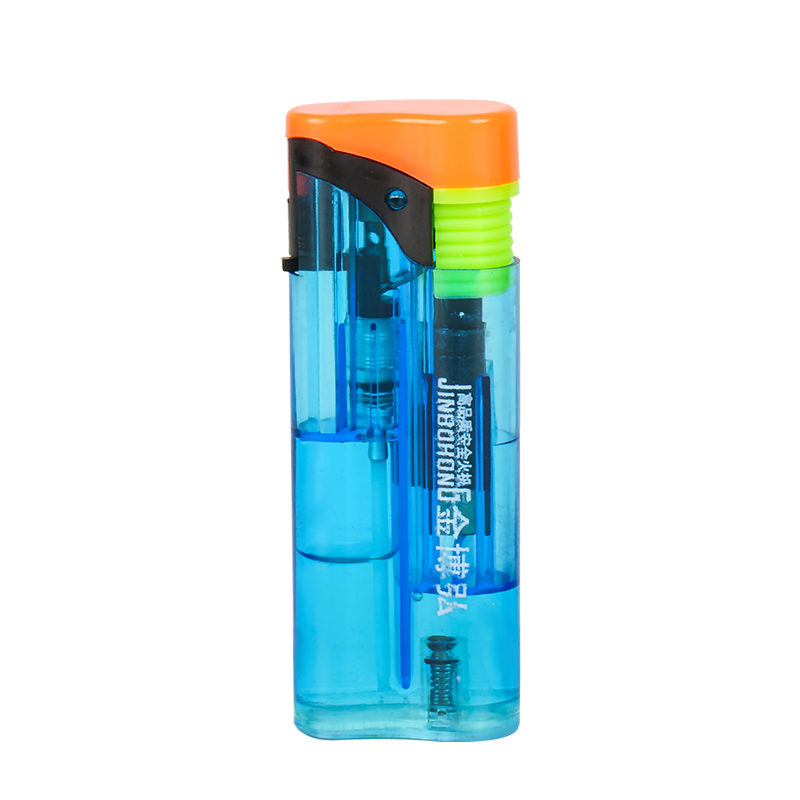
A transparent or semi-transparent fuel tank window eliminates the frustrating guesswork of whether your lighter is about to run out mid-task. This feature is especially valuable for professional users — a chef finishing a dessert service or a jeweler mid-anneal should not have to interrupt work to test fuel level. Premium torch lighters often include a clear polycarbonate or glass window on the side of the tank.
Piezoelectric vs. Flint Ignition
Piezoelectric igniters are superior in almost every measurable way: they last for tens of thousands of ignition cycles without replacement, require no consumable parts, and fire reliably even in cold temperatures down to about 14 °F (-10 °C). Flint igniters are cheaper to manufacture and serve as a backup if the piezo fails, but they require periodic flint replacement and can become unreliable when the flint is wet or worn.
Body Material and Ergonomics
Zinc alloy (zamak) and stainless steel bodies offer the best durability, while ABS plastic bodies are lighter but more susceptible to cracking from drops. For outdoor and professional use, a metal body is strongly recommended. Ergonomic considerations include grip texture (rubberized grips prevent slipping with wet hands), overall weight balance, and nozzle angle — some models feature a 90-degree angled nozzle that keeps the flame directed downward when the lighter is held upright, which is safer and more natural for most tasks.
How to Safely Use and Maintain a Torch Lighter
Safe torch lighter use requires keeping the nozzle pointed away from people, never using near flammable vapors, and storing the lighter in a cool location away from direct sunlight — butane tanks can rupture at temperatures exceeding 120 °F (49 °C).
Refilling: Always refill in a well-ventilated area, away from open flames. Hold the lighter upside down and press the refill canister valve firmly into the fill port for 5–10 seconds. Wait at least 2 minutes after refilling before igniting — residual propellant gas from the butane canister needs time to dissipate.
Cleaning the jet nozzle: If the flame becomes irregular or sputtering, use a can of compressed air to blow debris out of the nozzle orifice. Never insert any metal object into the nozzle — even a thin wire can permanently deform the precision orifice and ruin flame quality.
Storage: Store torch lighters at room temperature, away from heat sources, car dashboards, and direct sunlight. At temperatures above 120 °F, the internal pressure can exceed the tank's rated limit, potentially causing a leak or rupture.
Altitude considerations: At high altitudes (above 8,000 feet / 2,400 m), lower atmospheric pressure reduces oxygen availability, which may cause a torch lighter flame to appear orange or yellow instead of blue. Reduce the flame adjustment slightly to compensate.
Air travel: The TSA and FAA permit one common lighter per person in carry-on luggage, but torch lighters (blue-flame lighters) are prohibited in both carry-on and checked baggage on U.S. flights. Always check airline and local regulations before traveling internationally with a torch lighter.
Frequently Asked Questions About Torch Lighters
Q: Is a torch lighter the same as a butane lighter?
A: Not exactly — all torch lighters use butane, but not all butane lighters are torch lighters. A conventional soft-flame butane lighter uses a low-pressure wick system to produce a gentle yellow flame. A torch lighter uses high-pressure jets to produce a directed blue flame. The fuel is the same; the delivery mechanism and resulting flame characteristics are fundamentally different.
Q: How hot does a torch lighter get?
A: A standard single-jet torch lighter produces a flame of approximately 2,300 °F (1,260 °C), while high-output triple-jet models can approach 2,600 °F (1,427 °C). For reference, the melting point of silver is 1,763 °F (962 °C), meaning a torch lighter can melt silver — an important consideration for both jewelry work and accidental contact with metal surfaces.
Q: Why does my torch lighter flame turn orange?
A: An orange or yellow torch lighter flame almost always indicates one of three issues: low-quality butane with impurities, a partially clogged nozzle, or incorrect fuel-to-air ratio caused by a flame set too high. Try bleeding and refilling with high-quality triple-refined butane, cleaning the jet with compressed air, and reducing the flame adjustment dial. If the flame remains orange after these steps, the nozzle may need professional servicing or replacement.
Q: Can you use a torch lighter for cooking food directly?
A: Yes — torch lighters are widely used in culinary applications, but only when fueled with high-purity butane, as impurities in the gas can impart unpleasant odors or flavors to food. Culinary-specific torch lighters (kitchen torches) are essentially scaled-up torch lighters with larger tanks and ergonomic handles. Standard pocket torch lighters can be used for occasional culinary tasks, but a dedicated kitchen torch is recommended for frequent food preparation use.
Q: How long does butane last in a torch lighter?
A: A fully fueled single-jet torch lighter typically provides 20–60 minutes of continuous burn time, while larger table torch models can burn for 2–4 hours. Under real-world use — short bursts of 2–5 seconds — a pocket torch lighter's fuel supply generally lasts several weeks of daily use before needing a refill. Fuel consumption depends heavily on flame size setting and jet count.
Q: Are torch lighters allowed on airplanes?
A: In the United States, torch lighters (also called blue-flame or jet lighters) are prohibited in both carry-on and checked baggage by the FAA. Only standard disposable lighters and one common lighter without fuel are permitted. Internationally, regulations vary — always check IATA guidelines and the specific airline's policy before traveling. Violation of these rules can result in confiscation and significant fines.
Q: What is the best number of jets for a cigar torch lighter?
A: For most cigar smokers, a double-jet torch lighter offers the ideal balance between heat coverage and fuel efficiency. A single jet is sufficient for smaller ring gauge cigars (below 50 ring), while a triple jet excels at toasting large ring gauge cigars (60+) quickly and evenly. Double-jet models handle the widest range of cigar sizes without the fuel penalty of a triple-jet design.
Summary: Is a Torch Lighter Right for You?
If you regularly face windy outdoor conditions, work with premium cigars, cook with a flame, or need precision heat for craft or repair work, a torch lighter is a practical and worthwhile upgrade from a conventional lighter.
The torch lighter's defining advantages — a wind-resistant jet flame up to 5× hotter than a soft flame, clean combustion that won't taint food or cigars, and a refillable fuel system that makes it more economical and environmentally responsible than disposable lighters — make it the clear choice for any application where reliable, high-intensity ignition matters.
For most buyers, a double-jet, piezoelectric, refillable torch lighter with a flame adjustment dial, child-safety lock, and fuel window represents the best combination of performance, safety, and longevity. Pair it with triple-refined or higher butane, maintain the nozzle regularly, and your torch lighter will serve you reliably for years.
Whether you are a culinary enthusiast caramelizing sugar, a cigar aficionado toasting a robusto, or a hiker who needs a dependable fire starter deep in the backcountry, understanding exactly what a torch lighter is and how it works puts you in the best position to choose the right model and use it safely, efficiently, and confidently.






 English
 русский
 Español
 عربى
عربى