

 English
 русский
 Español
 عربى



An armor lighter is a pocket lighter built around a deliberately thicker metal shell and a reinforced hinge and lid assembly, so it keeps its shape through drops, pocket abrasion and years of open-and-close cycles that would slowly deform a standard pressed-steel body. You pay for that in two currencies: weight and unit price. A typical armor-style body runs noticeably heavier than a standard iron-shell lighter, and it usually costs more per piece.
Whether the extra metal is worth it comes down to how the lighter travels. Carried loose in a pocket with keys, dropped on tile, used outdoors with gloves on, or handed to staff who are not gentle with tools, a thicker shell pays for itself quickly. Kept in a drawer and used to light candles at home, it mostly adds weight. The rest of this guide covers what actually differs, which numbers to ask for, and where the quality risks sit.
What Separates an Armor Lighter From a Standard One
Three measurable properties decide the difference: shell wall thickness, overall mass, and the strength and alignment of the hinge and lid fit. Everything else — finish, decoration, packaging — is cosmetic by comparison.
- Wall thickness. Standard pressed steel shells commonly sit around 0.25–0.35 mm, while heavier-duty armor-style shells typically run near 0.45–0.60 mm, close to double the material.
- Mass. A standard iron-shell pocket lighter often lands around 50–60 g; heavier-built versions commonly reach 70–90 g, which you feel immediately when the lid closes.
- Hinge and lid fit. Thicker gauge steel allows a longer hinge pin and a stiffer leaf, so the lid stays square to the body instead of developing side-to-side play after a few thousand cycles.
One caution on terminology: "armor" is a trade description, not a certified standard. No test house issues an armor rating for lighters, so the word means only what the specification sheet and the physical sample say it means. Ask for the wall thickness in millimetres rather than accepting the label.
Standard Shell vs Armor-Style Build: A Practical Comparison
The table below summarises the differences that show up in real use, not on a spec sheet alone.
| Property | Standard shell lighter | Armor-style lighter | Practical effect |
|---|---|---|---|
| Shell wall | approx. 0.25–0.35 mm | approx. 0.45–0.60 mm | Dents instead of splitting; body stays square after a fall |
| Typical mass | 50–60 g | 70–90 g | Noticeable in a shirt pocket, reassuring in a tool bag |
| Hinge build | Short pin, thin leaf | Longer pin, thicker leaf | Lid alignment survives thousands of openings |
| Lid play over time | Appears early | Appears slowly | Fewer loose lids and snapped hinges in service |
| Impact tolerance | Deforms on hard tile and stone | Resists deformation | Fewer units written off after a drop |
| Unit cost | Lower | Higher | Justified only where the lighter takes real abuse |
Why Thicker Metal Changes Everyday Performance
A heavier shell is not just about surviving a fall; it protects the parts that actually fail first — the lid seating, the gas valve and the ignition assembly. A thin shell deforms at the corners the moment it hits a hard floor, and once the body is out of square, the lid no longer seats flat. That gap lets dust and lint into the mechanism and lets fuel escape faster between uses.
There is a thermal angle too. A thicker wall spreads heat more evenly and keeps the fuel reservoir further from a flame held close for more than a few seconds, which matters when the lighter is used for camping stoves, rope ends or workshop tasks rather than a single cigarette. The trade-off is honest: an armor-style body feels heavier in a shirt pocket and can feel clumsy to someone who wants a slim, almost weightless lighter. Buyers who carry a lighter for hours a day often choose a middle weight rather than the heaviest option available.
What to Verify Before You Pay
Five checks catch most of the quality differences, and all of them can be done on a sample in under ten minutes.
- Ask for the wall thickness figure. A supplier who builds to a spec will quote a number; one who does not will describe the product as "heavy duty" and move on.
- Test the lid play. Open and close the lighter twenty times, then try to rock the lid side to side. Any visible movement on a new unit will grow into a loose lid.
- Check lid seating tolerance. With the lid closed, run a fingernail along the seam. A consistent, tight line all the way round means the body is square; a widening gap at one corner means it is not.
- Confirm the ignition and valve system. Electronic ignition, wheel ignition and adjustable flame each behave differently in wind and cold, and a refillable valve should accept a standard butane nozzle without an adapter.
- Weigh the piece. If a claimed armor model weighs the same as the standard model from the same supplier, the difference is plating and marketing, not metal.
Matching the Build to the Use Case
The right specification depends on where the lighter lives, so start from the scenario rather than the catalogue page.
| Use case | Priority | Reason |
|---|---|---|
| Daily pocket carry | Moderate weight, tight lid, refillable valve | Comfort matters more than maximum impact tolerance |
| Camping and hiking | Wind resistance, thick shell, secure ignition lock | Cold hands, hard ground and wind expose weak builds fast |
| Workshop and utility work | Impact resistance, adjustable flame, long run time | The lighter is treated as a tool, not an accessory |
| OEM and promotional orders | Consistent batch tolerance, decoration area, sample approval | Brand risk sits in unit-to-unit variation, not one hero sample |
Iron Shell Construction in Practice
Iron shell bodies are the most direct route to armor-style durability, because the material takes a dent rather than a crack and holds the lid frame square under impact. Within a full iron shell windproof lighter range, the useful distinctions are impact type versus direct-impact ignition, adjustable versus fixed flame, and refillable versus sealed fuel systems — each one changes how the lighter behaves after a year of use.
For buyers who need the heavier build in volume, three reference points cover most of the demand: a rugged body for general duty, an impact-type model for drop-prone environments, and a fall-resistant version where the lid and hinge take the most stress.
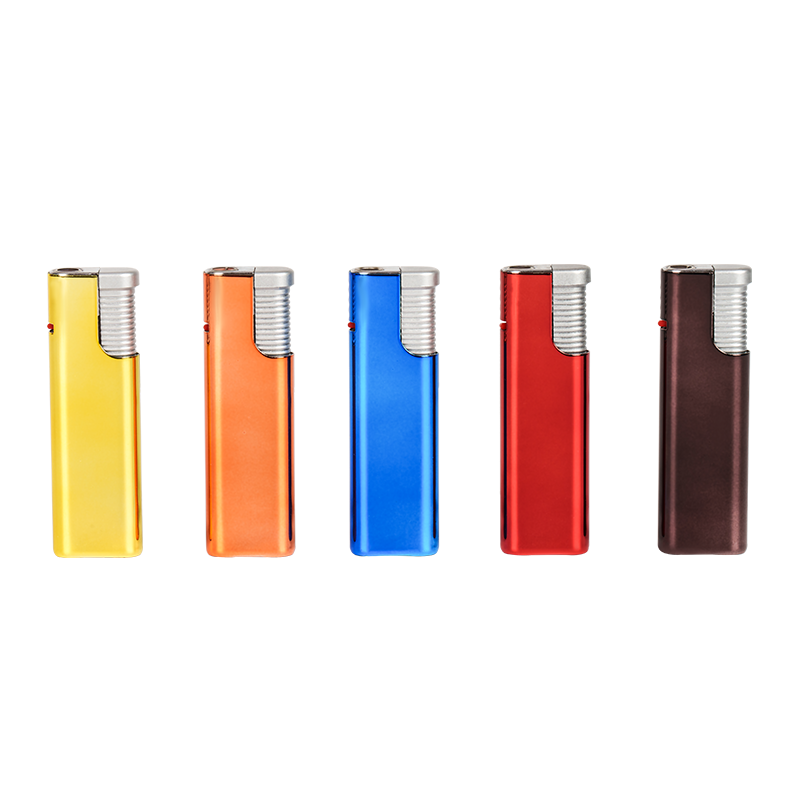 JH801 Rugged Iron Shell Windproof LighterThe JH801 is the general-duty rugged option, with an iron shell, windproof flame, and compact 26 g body for outdoor use.View Product →
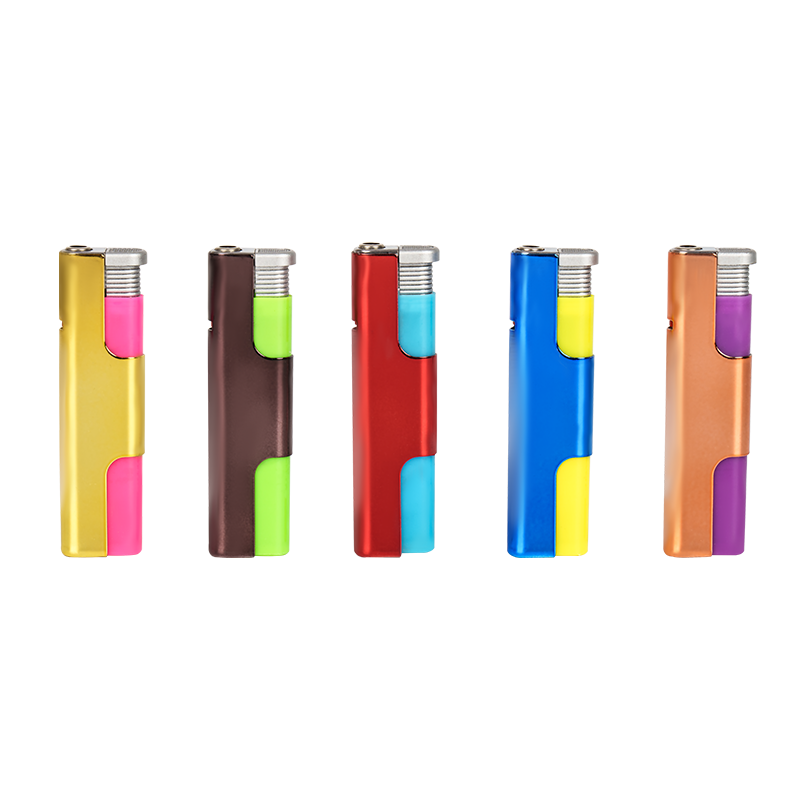 JH806 Impact-Type Iron Shell Windproof LighterThe JH806 is the impact-type model for drop-prone settings, with an iron shell, windproof flame, internal buffer, and 21.9 g body.View Product →
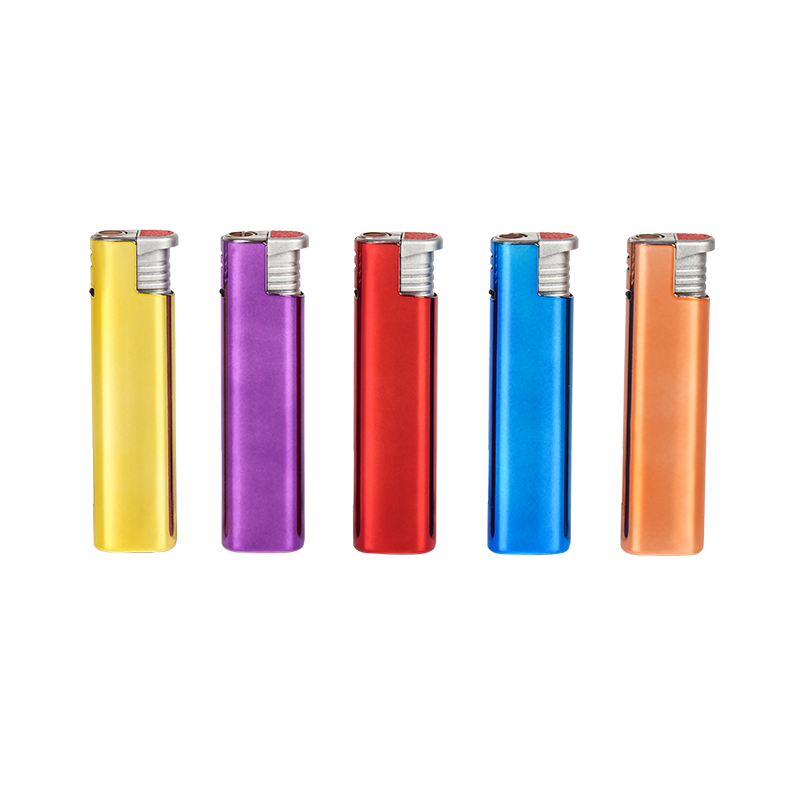 JH8016 Fall-Resistant Iron Shell Windproof LighterThe JH8016 is the fall-resistant option where lid and hinge stress matters, with an iron alloy shell, shock-absorbing design, and 25.6 g body.View Product →
Sourcing Risks Buyers Should Plan For
Most failures in an armor lighter order trace back to consistency rather than design, and they appear in the first production batch rather than the sample. The material selection behind iron shell durability explains why thickness and alloy choice matter, but the commercial risks sit elsewhere:
- Batch variation. A sample at 0.55 mm wall thickness does not guarantee the same figure across 20,000 units; ask for a tolerance band and an inspection report.
- Hinge assembly quality. Two suppliers can use identical steel and still produce different hinge life depending on pin fit and riveting pressure.
- Plating adhesion. Thicker shells with poor surface preparation chip at the edges within weeks; a simple cross-hatch adhesion check on the sample prevents this.
- Valve leakage. Confirm leak testing per unit rather than per batch, especially for refillable models shipped by air.
- Decoration limits. Deep engraving on a thin area of a thick shell can thin the wall locally — review artwork against the wall map before tooling.
Set an acceptance sampling plan, agree the AQL level in writing, and keep a signed golden sample. Those three steps resolve the majority of armor-lighter disputes before they reach a claim.
Frequently Asked Questions
Is an armor lighter actually stronger, or just heavier?
It is stronger where it counts, provided the wall thickness is genuinely higher. Mass alone proves nothing — a heavy decorative sleeve over a thin body adds weight without adding impact tolerance. Ask for the wall thickness figure and test lid play on a sample.
Does a thicker shell hold more fuel?
Not necessarily. A thicker wall can slightly reduce the internal volume for the same outer dimensions, though many armor-style models are built larger overall and therefore hold a comparable or slightly greater fuel load. Run time depends more on valve design, flame height and ambient temperature than on shell thickness.
Can an armor-style lighter still be refilled normally?
Yes, if it is built as refillable. The thicker body does not change the fuel port standard, so a normal butane nozzle works. Check that the valve is recessed and protected, since a protruding valve is the most common leak point after a drop.
Is the extra weight a problem for pocket carry?
For some users, yes. Anything above roughly 80 g is noticeable in a shirt pocket over a full day. If the lighter is carried daily and used lightly, a mid-weight model with a tight lid and good valve will serve better than the heaviest option in the range.
How long should an armor lighter last?
With a sound hinge, a protected valve and regular cleaning of the ignition area, a well-built unit should outlast several standard lighters used under the same conditions. Hinge play and valve leakage — not shell wear — are the practical limits on service life.
The short version: buy an armor lighter when the lighter is a tool that gets dropped, carried loose and used outdoors, and insist on a wall thickness figure, a tight lid and a protected valve before you commit. If those three checks pass on the sample, the extra metal is doing real work; if they do not, you are paying a premium for weight alone.