

 English
 русский
 Español
 عربى
عربى


A butane torch lighter works by releasing pressurized liquid butane from an internal reservoir, converting it to gas as it exits a nozzle, and igniting that gas with either a piezoelectric spark or a flint mechanism to produce a concentrated, high-temperature flame. Unlike a standard pocket lighter, a butane torch lighter forces the gas through a narrow jet at high velocity, mixing it with oxygen in a precise ratio that creates a flame reaching temperatures between 2,500°F and 2,610°F (1,370°C to 1,430°C) — hot enough to solder copper, caramelize sugar on a crème brûlée, or light a cigar evenly without imparting any chemical taste.
This guide breaks down every component inside a butane torch lighter, explains the chemistry and physics that make it work, compares flame types, and covers proper maintenance and safety — giving you a thorough understanding of one of the most useful tools in kitchens, workshops, and outdoor kits alike.
The Science Behind Butane: Why This Fuel Powers Torch Lighters
Butane is the ideal fuel for torch lighters because it liquefies under modest pressure, stores large amounts of energy in a small volume, and burns cleanly with a predictable, controllable flame. Butane (chemical formula C4H10) is a hydrocarbon gas at room temperature and atmospheric pressure, but it becomes liquid when compressed to approximately 30–35 psi (2–2.4 bar). That stored liquid is what sits inside the lighter's reservoir — and it is that phase transition from liquid back to gas, the moment pressure is released, that drives the entire system.
The energy density of butane is approximately 49 MJ/kg, which is comparable to propane (50 MJ/kg) and significantly higher than ethanol (26.8 MJ/kg). This high energy density means a small refillable canister can deliver many minutes of sustained flame. A typical 10 mL butane torch lighter reservoir holds enough fuel for 30 to 60 minutes of continuous burn time, depending on flame size and altitude.
Butane's combustion reaction with oxygen is:
2 C4H10 + 13 O2 → 8 CO2 + 10 H2O
When combustion is complete (sufficient oxygen available), the only byproducts are carbon dioxide and water vapor — no soot, no carbon monoxide, and no residual odor on the item being heated. This clean burn is why culinary torch lighters are safe to use directly on food, and why butane is preferred over propane for precision work indoors.
Key Components Inside a Butane Torch Lighter
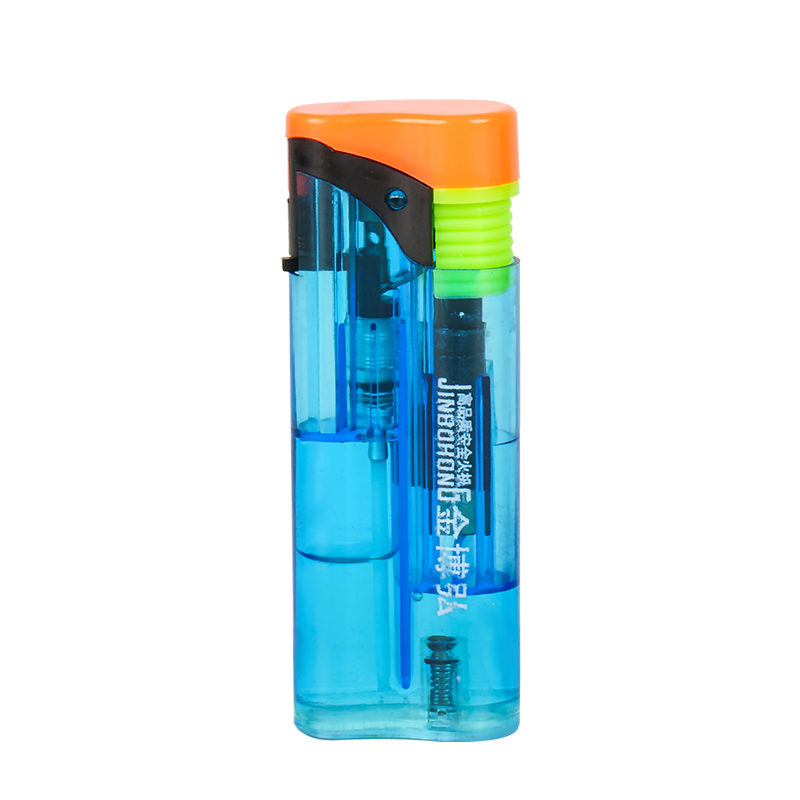
A butane torch lighter contains six primary components that work together in sequence: the fuel reservoir, the valve and flow control, the nozzle and venturi mixing chamber, the ignition system, the flame adjustment mechanism, and the safety lock. Understanding what each part does makes troubleshooting, refilling, and proper use much more intuitive.
1. Fuel Reservoir
The reservoir is a sealed chamber — typically made from brass, stainless steel, or high-density plastic — that holds liquid butane under pressure. Its volume determines fuel capacity. Entry-level pocket torch lighters typically hold 3–8 mL, while professional culinary torches may hold 50–100 mL. The reservoir has a one-way refill valve at the base (compatible with standard butane canister nozzles) and a separate outlet valve at the top that connects to the flow control system.
2. Valve and Flow Control Assembly
The valve is the gatekeeper of fuel flow. When the trigger or button is pressed, it opens a spring-loaded needle valve that allows liquid butane to exit the reservoir and travel toward the nozzle. The flow control dial — typically a small set screw or wheel on the base or side of the lighter — adjusts a secondary restrictor that limits how much butane can pass through the valve at a time. Turning this dial determines whether you get a small, pencil-thin flame or a wide, aggressive torch.
3. Nozzle and Venturi Mixing Chamber
The nozzle is the defining feature that separates a torch lighter from a conventional lighter. As liquid butane exits the valve, it rapidly vaporizes when pressure drops at the nozzle outlet. The gas is then accelerated through a narrow orifice — often just 0.1 to 0.3 mm in diameter in a precision torch — which creates a high-velocity jet. This jet draws ambient air into side ports through the Venturi effect, pre-mixing fuel and oxygen before ignition. This premixing is what creates the characteristic blue, non-luminous, intensely hot torch flame, as opposed to the yellow, sooty diffusion flame of a candle or basic lighter.
4. Ignition System
Most modern butane torch lighters use a piezoelectric ignition system. When the trigger is pressed, it compresses a small piezoelectric crystal (typically lead zirconate titanate, PZT) at high speed. The mechanical deformation generates a voltage spike of 800 to 2,000 volts — sufficient to jump a spark gap positioned directly at the nozzle outlet. The spark ignites the butane-air mixture in milliseconds. No battery is required, and piezo crystals can reliably generate sparks tens of thousands of times before degradation. Some older or entry-level torch lighters use a flint-and-steel ignition, where a serrated wheel strikes a flint rod to produce sparks — effective but requiring periodic flint replacement.
5. Flame Adjustment Mechanism
The flame adjustment screw or dial controls the flow restrictor downstream of the main valve. On most torch lighters, turning clockwise reduces fuel flow (smaller, lower flame) and counterclockwise increases it (larger, hotter flame). The adjustment range is typically printed as a "+" and "-" indicator. Setting the flame too high for the reservoir pressure available (for instance, when the fuel level is low) can cause an unstable, flickering flame or ignition failure.
6. Safety Lock
Quality butane torch lighters include a physical safety lock — a sliding tab or rotating collar — that mechanically blocks the trigger from being depressed accidentally. This is especially important in tools with a continuous-flame (locking) mode, where the flame stays on without holding the trigger. Always engage the safety lock during storage and transport.
Step-by-Step: What Happens When You Pull the Trigger
The entire firing sequence of a butane torch lighter — from trigger press to sustained flame — takes less than one-tenth of a second and involves a precise chain of mechanical, thermodynamic, and chemical events.
- Trigger pressed: The lever or button compresses the piezoelectric crystal and simultaneously opens the needle valve. Both actions happen in the same motion.
- Valve opens: Pressurized liquid butane flows from the reservoir through the valve passage toward the nozzle at the rate set by the flow control.
- Butane vaporizes: As liquid butane exits into the low-pressure zone at the nozzle, it flashes to gas (a process called flash evaporation). The rapid phase change absorbs latent heat from the surrounding metal, which is why torch lighters feel cool at the nozzle base during extended use.
- Venturi mixing: The high-velocity butane jet creates a low-pressure zone at the air inlet ports, drawing in ambient air and mixing it with butane vapor in a ratio of approximately 1 part butane to 31 parts air by volume (the stoichiometric combustion ratio).
- Spark ignition: The piezoelectric pulse discharges across the spark gap, igniting the butane-air mixture at the nozzle tip.
- Sustained combustion: The flame stabilizes as a continuous stream of fresh butane-air mixture feeds the combustion zone. The blue inner cone of the flame is the primary combustion zone; the surrounding outer cone completes oxidation of any remaining fuel.
Types of Butane Torch Lighters Compared
Butane torch lighters fall into four practical categories based on flame type and intended use: pencil flame torches, soft flame torches, culinary torches, and industrial/plumbing torches — each optimized for a different temperature range and application.
| Type | Flame Temp | Flame Size | Fuel Capacity | Best Applications |
| Pencil Flame Torch | Up to 2,500°F (1,370°C) | Narrow, precise | 3–8 mL | Cigars, jewelry, electronics |
| Soft Flame Torch | 1,800–2,200°F (980–1,200°C) | Wider, gentle | 5–10 mL | Candles, pipes, general use |
| Culinary Torch | Up to 2,610°F (1,430°C) | Wide, adjustable | 50–100 mL | Creme brulee, searing, glazing |
| Industrial Butane Torch | Up to 2,800°F (1,540°C) | Large, powerful | Canister (external) | Soldering, plumbing, shrink tubing |
Table 1: Comparison of butane torch lighter types by flame temperature, size, fuel capacity, and primary applications.
Butane Torch Lighter vs. Other Ignition Tools: Which Is Best?
A butane torch lighter outperforms conventional lighters and matches in temperature precision and wind resistance, while offering cleaner combustion and greater portability than propane torches for most precision tasks.
| Tool | Max Flame Temp | Wind Resistant? | Refillable? | Food Safe? | Portability |
| Butane Torch Lighter | 2,610°F (1,430°C) | Yes | Yes | Yes | Excellent |
| Standard Pocket Lighter | 3,590°F (1,977°C)* | No | Some | No | Excellent |
| Propane Torch | 3,623°F (1,995°C) | Yes | Yes (canister) | No | Moderate |
| Electric Arc Lighter | N/A (plasma arc) | Yes | Yes (USB) | No | Good |
| Matches | 1,100°F (593°C) | No | No | No | Good |
Table 2: Comparison of butane torch lighters against common ignition tools across key performance criteria.
* Standard pocket lighter flame temperature is theoretical maximum; usable heat output is far lower due to diffusion combustion and no premixing.
How to Refill a Butane Torch Lighter Correctly
Refilling a butane torch lighter incorrectly — using the wrong grade of butane, failing to purge the reservoir first, or overfilling — is the leading cause of performance problems, ignition failure, and safety incidents with these tools.
- Turn the flame adjustment to minimum (fully clockwise) before starting. This prevents fuel from venting during the refill process.
- Purge the reservoir by inserting a small pin or the tip of the butane canister nozzle into the refill valve and pressing briefly to release any residual gas and air. Air trapped in the reservoir causes sputtering and misfires. Purge until no more gas sounds are heard.
- Let the lighter reach room temperature if it has been in use. Cold butane fills better; a warm lighter pressurizes more quickly and may resist taking fuel efficiently.
- Hold the lighter inverted (refill valve pointing up) and press the butane canister nozzle firmly into the valve. Maintain steady pressure for 5 to 10 seconds. You will feel the canister getting slightly colder as liquid butane transfers.
- Use triple-refined or higher-grade butane. Low-purity butane contains propane, iso-butane, and contaminants that clog the fine nozzle orifice over time. Most torch lighter manufacturers recommend a minimum purity of 99.5% n-butane.
- Wait 2–3 minutes after filling before attempting to light. This allows residual liquid butane around the nozzle to evaporate and lets the pressure inside the reservoir stabilize.
- Do not overfill. Stop when you feel resistance or see butane beginning to escape from around the fill valve. Overfilling raises reservoir pressure above the design limit and can cause valve failure or leaking.
Butane Torch Lighter Safety: What You Need to Know
Butane torch lighters are safe when used correctly, but butane's flammability range of 1.8% to 8.4% in air means that leaks or misuse in enclosed spaces can create an invisible explosion hazard before ignition even occurs.
- Never refill near an open flame or heat source. Butane vapor is heavier than air and can accumulate at floor level, traveling to a distant ignition source.
- Store at temperatures below 122°F (50°C). High temperatures raise reservoir pressure beyond the safe design limit. Never leave a butane torch lighter in a parked car during summer months — interior car temperatures can exceed 160°F (71°C).
- Keep the safety lock engaged whenever the lighter is not in active use. Accidental activation is the most common cause of unintended ignition events.
- Do not operate upside down (nozzle pointing downward) unless the lighter is specifically designed for it. Inverted operation can allow liquid butane — not vapor — to reach the nozzle, causing a large, uncontrolled flare-up.
- Allow the nozzle to cool between extended uses. The nozzle tip can reach temperatures that ignite paper or fabric on contact even after the flame is extinguished.
- Never attempt to disassemble the valve or reservoir while fuel is present. The internal pressure is sufficient to cause injury if a fitting is suddenly released.
Common Butane Torch Lighter Problems and How to Fix Them
Most butane torch lighter failures trace back to four root causes: air in the reservoir, a clogged nozzle, a worn piezo igniter, or a maladjusted flame control — all of which are fixable with basic maintenance.
| Problem | Likely Cause | Solution |
| Flame sputters or goes out | Air in reservoir | Purge and refill correctly |
| No spark on trigger press | Worn piezo crystal or dirty spark gap | Clean gap with compressed air; replace piezo if needed |
| Weak or yellow flame | Clogged nozzle or low-purity butane deposits | Clear nozzle with thin wire or compressed air; switch to high-purity butane |
| Fuel leaks around valve | Damaged O-ring or overfill | Replace valve O-ring; do not overfill |
| Flame too large / uncontrollable | Flame control at maximum; stuck flow restrictor | Adjust flame dial; clean restrictor passage |
| Lighter works cold but not warm | Overfilled reservoir; excess pressure at high temp | Purge slightly to reduce pressure; avoid overfilling |
Table 3: Common butane torch lighter problems, their likely causes, and recommended fixes.
Frequently Asked Questions About Butane Torch Lighters
Q: How hot does a butane torch lighter actually get?
The hottest point of a butane torch flame — the tip of the inner blue cone — reaches approximately 2,500°F to 2,610°F (1,370°C to 1,430°C) under ideal premixed combustion conditions. The outer envelope of the flame is considerably cooler, typically 1,800°F to 2,000°F. For context, this is hot enough to melt copper (1,984°F / 1,085°C), solder silver, and caramelize sugar in seconds, but not hot enough to melt steel without concentrated and sustained application.
Q: Why does my butane torch lighter stop working in cold weather?
Butane has a boiling point of 30.2°F (-1°C), which means that in cold conditions, the liquid butane inside the reservoir has lower vapor pressure and may not produce enough gas flow to support a stable flame. Below 32°F (0°C), standard butane torch lighters become unreliable. Solutions include warming the lighter briefly in your hands before use, using a butane-propane blend (isobutane boils at 10.9°F / -11.7°C and performs better in cold), or storing the lighter in an inner pocket close to body heat.
Q: Is the flame from a butane torch lighter safe to use directly on food?
Yes, provided the butane is high-purity (triple-refined or better) and combustion is complete. Pure butane burns to carbon dioxide and water vapor, leaving no toxic residue on food. Incomplete combustion — typically from a poorly adjusted flame or depleted reservoir — can produce trace carbon monoxide and unburned hydrocarbons that may impart an off-flavor. Always use a strong, fully blue torch flame for culinary applications and keep the lighter moving to avoid scorching.
Q: How long does a full butane torch lighter last?
A standard pocket-sized butane torch lighter (approximately 5 mL reservoir) provides around 20 to 40 minutes of continuous burn time at a medium flame setting. A full-size culinary torch with a 100 mL reservoir can burn for 60 to 90 minutes continuously. In practice, most users burn the lighter in short bursts (5–30 seconds each), so a filled lighter may last weeks or months in typical use. The piezoelectric igniter is rated for at least 30,000 ignition cycles in quality units.
Q: Can I use any butane canister to refill a torch lighter?
Most butane torch lighters use a standard Schrader-type refill valve that accepts a universal butane canister nozzle. However, the purity of the butane matters significantly. Cheap or low-grade butane contains impurities that deposit residue on the nozzle orifice over time, gradually restricting flow and degrading flame quality. Always use triple-refined or instrument-grade butane for torch lighters with precision nozzles. Avoid using butane intended for stoves or camp fuel, as its purity grade is typically insufficient for the fine orifices in a torch lighter.
Q: What is the difference between a single-flame and a triple-flame butane torch?
A single-flame torch has one nozzle producing one jet of premixed butane and air, giving a focused, precise flame ideal for detailed work such as jewelry soldering, electronics, or lighting a cigar at a specific spot. A triple-flame torch has three nozzles arranged in a row or cluster, producing a wider, more even heat distribution. Triple-flame torches consume fuel approximately 3 times faster but heat a larger surface area simultaneously, which is why they are preferred for evenly lighting the foot of a large cigar or toasting a wide food surface. Neither type is universally superior — the choice depends on whether precision or coverage is the priority.
Conclusion
A butane torch lighter is a precisely engineered tool that converts stored liquid fuel into a controlled, high-temperature flame through a coordinated sequence of pressure release, phase change, Venturi mixing, and piezoelectric ignition. Understanding how each component works — from the reservoir and needle valve to the nozzle orifice and spark gap — makes the difference between a tool that performs reliably for years and one that frustrates with sputtering flames and failed ignition.
The key practical takeaways are straightforward: always use high-purity butane, purge the reservoir before refilling, keep the flame adjustment set to the minimum needed for the task, engage the safety lock when not in use, and store the lighter away from heat. With those habits in place, a quality butane torch lighter will deliver thousands of reliable ignitions across every application from culinary to workshop use.
Whether you are choosing your first butane torch lighter or troubleshooting an existing one, the mechanical and chemical principles outlined here give you the foundation to make informed decisions and get the most from this versatile tool.